메뉴
쇼핑

history
# Dacian Falx – The Fearsome Curved Weapon of Ancient Dacia and the Roman–Dacian Wars # 다키아인의 팔크스(Falx) – 로마군을 위협한 고대 다키아의 강력한 곡도
JosuaJosua ·
09-088
# Dacian Falx – The Fearsome Curved Weapon of Ancient Dacia and the Roman–Dacian Wars
# 다키아인의 팔크스(Falx) – 로마군을 위협한 고대 다키아의 강력한 곡도
# ダキア人のファルクス(Falx)― ローマ軍を脅かした古代ダキアの湾曲武器
# 达契亚人的法尔克斯(Falx)——令罗马军团警戒的古代达契亚弯刃武器


## 🇺🇸 English
### Dacian Falx – The Iconic Curved Weapon of Ancient Dacia
The **falx**, particularly the weapon commonly called the **Dacian falx or falx dacica**, is one of the most famous weapons associated with the ancient **Dacians**, peoples who inhabited areas centered on present-day Romania and neighboring regions.
It became especially famous during the **Dacian Wars of Emperor Trajan, AD 101–102 and 105–106**, when Rome fought the kingdom of the Dacian king **Decebalus**.
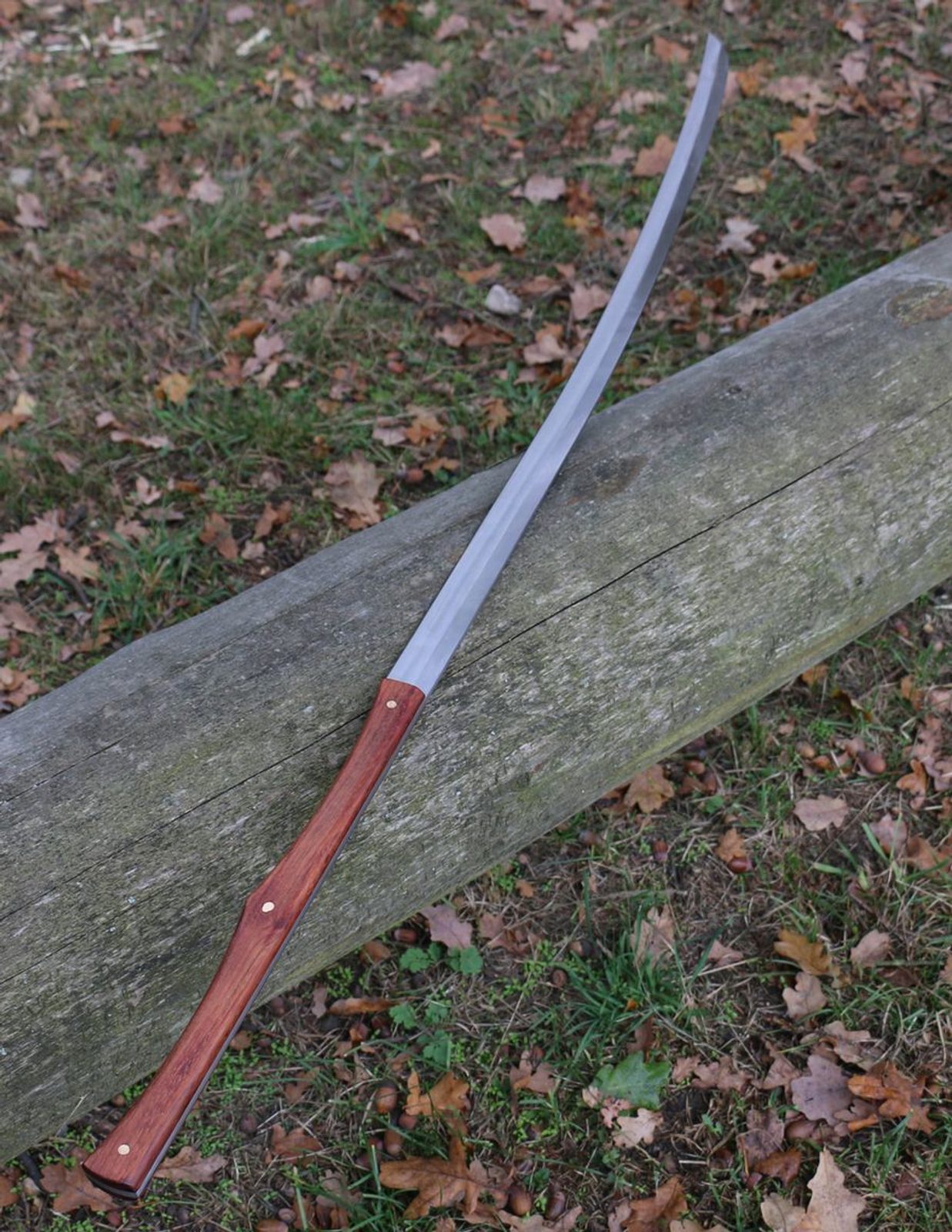
The falx is recognizable by its long, dramatically curved blade whose **cutting edge was on the concave, inner side of the curve**. Large examples were apparently wielded with two hands, producing powerful downward and hooking blows. Ancient representations and archaeological finds indicate that curved weapons existed in several forms rather than as one rigidly standardized design. ([위키백과][1])
### 1. What Did a Dacian Falx Look Like?
A typical reconstruction of the large falx consists of:
* a relatively long wooden grip or shaft,
* an iron blade,
* a pronounced forward or inward curve,
* an edge sharpened primarily along the inner curve,
* and a pointed end capable of concentrating considerable force.
The geometry is fundamentally different from that of a straight Roman **gladius**.
Rather than depending principally on thrusting, the falx was optimized for a powerful chopping and drawing action. The curved tip could also create a hooking effect against an opponent or his equipment. ([Kiwix Server][2])
### 2. Falx and Sica Are Not Exactly the Same Weapon
The terms **falx** and **sica** are sometimes mixed together in popular descriptions, but they should be distinguished.
The **sica** was generally a shorter curved weapon associated with Thracian and Dacian cultures, whereas the large **two-handed falx** was substantially longer and functioned more like a heavy battlefield cutting weapon.
Because archaeological specimens and Roman artistic representations show substantial variation, historians are cautious about treating every curved Dacian blade as belonging to a single standardized category. ([위키백과][1])
### 3. Why Was the Falx Dangerous?
The main advantage of the falx came from its **curved geometry and concentrated impact**.
When swung downward, the inward-facing edge and hooked tip could deliver substantial force to the target. It could potentially strike areas poorly protected by a shield, such as:
* the head,
* shoulders,
* arms,
* legs,
* and edges or gaps in defensive equipment.
The curvature also gave it the potential to reach around an obstacle or interact with the edge of a shield differently from a conventional straight sword.
The weapon was therefore particularly threatening in the hands of a trained infantryman with enough room to swing it. ([위키백과][1])
### 4. The Falx in Trajan’s Dacian Wars
The weapon gained its legendary reputation during Rome’s wars against Dacia.
Emperor **Trajan** launched two major campaigns against King Decebalus:
**First Dacian War:** AD 101–102
**Second Dacian War:** AD 105–106
The second war ended with the destruction of the Dacian kingdom as an independent great power and the establishment of a Roman province in much of its territory.
Dacian warriors equipped with curved weapons appear in Roman victory monuments, most famously **Trajan’s Column in Rome** and the **Tropaeum Traiani at Adamclisi**.
Importantly, those monuments do not depict the weapon in precisely the same way. This is one reason historians remain cautious about assuming that every modern reconstruction represents a single universal “official” falx design. ([위키백과][1])
### 5. Did the Falx Force Rome to Reinforce Its Armour?
This is one of the most famous stories surrounding the weapon.
Roman helmets associated with the Dacian campaigns are known with **crosswise reinforcing bars**, and Roman soldiers of the period are also represented using additional limb protection such as the **manica**, an articulated arm guard.
These adaptations have traditionally been interpreted as responses to dangerous Dacian cutting weapons, especially the falx. ([위키백과][1])
However, the strongest version of the claim — that Rome invented or introduced all of these protective devices *solely* because of the falx — should be treated cautiously.
For example, segmented arm protection was already known in Roman gladiatorial and military contexts before Trajan's Dacian campaigns. The evidence is therefore better stated this way:
> The Dacian wars appear to have encouraged the Romans to employ or reinforce certain forms of protective equipment, and the falx was probably an important factor, but not every Roman armour development can be attributed exclusively to it.
That distinction is important in modern archaeological interpretation.
### 6. Strengths of the Falx
The weapon offered several tactical advantages.
Its long curved blade could produce extremely forceful cuts, while the hooked geometry could make conventional blocking more difficult.
A large two-handed weapon also gave the user considerable leverage and reach.
Against an opponent depending heavily on a large shield and helmet, an attack arriving from an unusual curved trajectory could be particularly dangerous.
### 7. Weaknesses of the Falx
The falx was not an invincible “super weapon.”
A large two-handed version created several disadvantages.
The warrior generally could not hold a normal shield while using it with both hands. It also required **space to swing**, reducing its usefulness in extremely congested close combat.
The design emphasized cutting rather than conventional straight-line thrusting, and a strongly curved weapon could potentially become caught in equipment or a target.
Research on reconstructions has therefore emphasized that the weapon demanded specialized technique and suitable tactical conditions. ([Centrul de Studii DacoRomanistice Lucus][3])
### 8. Who Used the Falx?
Popular illustrations sometimes suggest that virtually every Dacian warrior carried a huge falx.
The archaeological picture is more complicated.
Dacian armies also used:
* spears,
* javelins,
* bows,
* straight swords,
* curved blades,
* shields,
* axes,
* and cavalry weapons.
The scarcity of surviving large falx specimens has led some researchers to propose that the large two-handed weapon may have been associated particularly with **specialized or elite infantry warriors**, rather than being universal standard equipment. ([Centrul de Studii DacoRomanistice Lucus][3])
### 9. Falx vs Roman Gladius
| Feature | Dacian Falx | Roman Gladius |
| --------------------- | ------------------------- | ---------------------- |
| Blade | Strongly curved | Straight |
| Cutting edge | Mainly inner curve | Straight edges |
| Typical large version | Two-handed | One-handed |
| Primary action | Chopping/drawing | Thrusting and cutting |
| Shield compatibility | Limited for large falx | Excellent |
| Reach | Relatively long | Relatively short |
| Tactical role | Powerful individual blows | Dense formation combat |
The difference reflects two very different combat systems.
The **gladius** was exceptionally effective in disciplined Roman formation fighting behind the **scutum**, whereas the falx emphasized powerful cutting attacks and reach.
### 10. Why the Falx Became a Symbol of Dacia
The falx today occupies a place in Romanian and Dacian historical imagery comparable to other culturally distinctive weapons such as the Roman gladius or Greek kopis.
Its fame comes from three factors:
**distinctive design + Roman-Dacian warfare + Roman artistic depictions.**
It visually encapsulates the resistance of Decebalus’ kingdom to the Roman Empire.
At the same time, modern scholarship distinguishes the archaeological weapon from later romanticized depictions. The surviving evidence suggests several types of curved blades rather than one perfectly uniform falx.
### English SEO Keywords
**Dacian falx, falx dacica, Dacian weapon, ancient Dacia weapons, Dacian warrior, Decebalus weapon, Roman Dacian Wars, Trajan Dacian Wars, falx sword, curved Dacian sword, ancient Romanian weapon, Dacian history, Roman army vs Dacians, Trajan Column falx, ancient curved sword, Dacian military history, Roman armor falx, sica vs falx, ancient European weapons, Dacia history**
---
# 🇰🇷 한국어
## 다키아인의 팔크스(Falx) – 로마군에게 강한 인상을 남긴 고대 다키아의 곡도
**팔크스(Falx)**, 특히 **다키아 팔크스(Falx Dacica)**라고 불리는 무기는 고대 다키아인을 상징하는 대표적인 무기입니다.
다키아는 오늘날 **루마니아를 중심으로 한 카르파티아·도나우 지역**에 자리 잡았던 고대 세력으로, 데케발루스 왕 시대에 로마 제국과 격렬하게 충돌했습니다.
팔크스의 명성이 절정에 달한 것은 로마 황제 **트라야누스(Trajan)**가 벌인 **제1차 다키아 전쟁(101~102년)**과 **제2차 다키아 전쟁(105~106년)**이었습니다.
### 1. 팔크스는 어떻게 생겼나?
가장 유명한 대형 팔크스는 긴 손잡이에 강하게 휘어진 철제 날을 결합한 형태로 복원됩니다.
특징적인 부분은 날이 바깥쪽이 아니라 **휘어진 안쪽, 즉 오목한 면에 형성되었다는 것**입니다.
따라서 직선형 검처럼 찌르는 것보다는 크게 휘둘러 내려치고 당기면서 베는 공격에 적합했습니다. ([Kiwix Server][2])
끝부분이 갈고리처럼 전방으로 휘어 있기 때문에 방패의 가장자리나 방어구 밖으로 노출된 부위를 공격하는 데 유리했을 것으로 추정됩니다.
### 2. 팔크스와 시카(Sica)의 차이
팔크스를 설명할 때 **시카(Sica)**와 혼동하는 경우가 많습니다.
둘 다 안쪽에 날이 있는 곡도 계열이지만 일반적으로는:
**시카**
* 비교적 짧음
* 한 손 사용에 적합
* 단검 또는 짧은 곡검에 가까움
**대형 팔크스**
* 훨씬 길고 무거움
* 두 손 사용
* 강력한 내려베기에 특화
라는 차이가 있습니다.
다만 실제 출토품과 로마 시대 부조에는 여러 형태가 나타나기 때문에 고대 다키아의 곡도를 현대식으로 지나치게 깔끔하게 분류하는 것은 주의해야 합니다. ([위키백과][1])
### 3. 팔크스가 무서웠던 이유
팔크스의 핵심은 **곡률 + 지렛대 효과 + 안쪽 날**입니다.
긴 무기를 양손으로 들어 강하게 내려치면 큰 운동에너지가 발생하고, 휘어진 끝부분에 힘이 집중될 수 있습니다.
따라서 로마 병사의 다음 부위가 특히 위험했을 것으로 생각됩니다.
* 머리와 투구
* 어깨
* 오른팔
* 다리
* 방패 가장자리 바깥
* 갑옷 사이의 취약부
특히 로마 군단병은 왼손으로 방패를 들고 오른손으로 무기를 사용했기 때문에 오른팔과 일부 사지가 완전히 보호되지 않는 경우가 있었습니다.
### 4. 로마-다키아 전쟁에서 등장한 팔크스
트라야누스는 데케발루스가 지배하던 다키아를 상대로 두 차례 대규모 전쟁을 벌였습니다.
**101~102년 : 제1차 다키아 전쟁**
**105~106년 : 제2차 다키아 전쟁**
106년 다키아 왕국은 결정적으로 패배했고 상당 지역이 로마 제국의 속주가 되었습니다.
이 전쟁과 관련된 다키아 전사와 곡도는 **트라야누스 원주**와 **아담클리시의 트로파이움 트라이아니** 같은 로마 기념물에도 표현되어 있습니다.
흥미로운 점은 두 기념물에 묘사된 곡도 형태가 완전히 일치하지 않는다는 것입니다. 따라서 오늘날 흔히 보는 “표준형 다키아 팔크스” 하나만이 존재했다고 단정하기는 어렵습니다. ([위키백과][1])
## 5. 로마군이 팔크스 때문에 투구를 강화했나?
팔크스와 관련해 가장 유명한 이야기가 바로 이것입니다.
다키아 전쟁과 연결되는 일부 로마 투구에서는 **철제 보강대를 십자 형태로 추가한 사례**가 확인됩니다.
또한 군단병들이 **마니카(manica)**라 불리는 분절형 팔 보호구와 다리 보호대를 사용한 모습도 알려져 있습니다.
전통적으로 이러한 변화는 다키아의 강력한 곡도 공격에 대한 대응으로 해석되어 왔습니다. ([위키백과][1])
그러나 여기에는 중요한 주의점이 있습니다.
**“팔크스 때문에 로마군이 마니카를 처음 발명했다”라고 단정하면 지나친 표현입니다.**
마니카 계열의 팔 보호 장비는 다키아 전쟁 이전 로마 세계에서도 사용된 증거가 있기 때문입니다.
따라서 보다 정확한 표현은:
**“다키아 전쟁에서 팔크스 같은 강력한 곡도에 대응하기 위해 로마군이 기존 보호 장비를 적극적으로 채택하거나 추가 강화했을 가능성이 높다.”**
정도입니다.
## 6. 팔크스의 장점
팔크스의 가장 큰 장점은 강력한 타격력입니다.
### 강한 내려베기
양손과 긴 손잡이를 이용하면 상당한 힘을 전달할 수 있습니다.
### 갈고리형 궤적
일반적인 직선검과 다른 방향으로 공격이 들어가기 때문에 방패 뒤쪽이나 가장자리를 노릴 수 있습니다.
### 긴 사거리
로마 글라디우스보다 상대적으로 긴 공격 범위를 확보할 수 있습니다.
### 심리적 효과
크게 휘어진 독특한 형태 자체도 상대에게 상당한 위압감을 줄 수 있었을 것입니다.
## 7. 팔크스에도 결정적인 약점이 있었다
팔크스가 로마군을 단숨에 압도하는 만능무기였던 것은 아닙니다.
대형 팔크스를 양손으로 사용한다면 **방패를 동시에 들기 어렵습니다.**
즉 공격력의 대가로 방어력이 떨어집니다.
또한 강한 위력을 내려면 충분한 휘두름 공간이 필요하기 때문에 밀집된 난전이나 극단적인 근접전에서는 사용이 제한될 수 있었습니다.
강하게 휘어진 날은 적이나 장비에 걸리는 문제도 발생할 수 있습니다.
따라서 숙련된 사용자를 필요로 하는 전문성이 높은 무기였을 가능성이 있습니다. ([Centrul de Studii DacoRomanistice Lucus][3])
## 8. 모든 다키아인이 팔크스를 사용했나?
그렇지는 않았습니다.
다키아 군대에는 팔크스 외에도
**창, 투창, 활, 도끼, 직선검, 시카, 방패, 기병 무기**
등 다양한 무기가 사용되었습니다.
또한 실제 대형 팔크스의 고고학적 출토량이 매우 많은 것은 아닙니다.
일부 연구에서는 대형 양손 팔크스를 **특별히 훈련받은 정예 또는 전문 보병**이 사용했을 가능성을 제시합니다. ([Centrul de Studii DacoRomanistice Lucus][3])
## 9. 팔크스와 로마 글라디우스 비교
| 비교 | 다키아 팔크스 | 로마 글라디우스 |
| ------ | --------- | -------- |
| 형태 | 강한 곡선 | 직선 |
| 주 공격 | 내려베기·당겨베기 | 찌르기·베기 |
| 대형형 사용 | 양손 | 한 손 |
| 방패 병용 | 어려움 | 매우 유리 |
| 공격 거리 | 비교적 김 | 짧음 |
| 전술 | 강력한 개별 타격 | 밀집대형 |
| 대표 사용자 | 다키아 전사 | 로마 군단병 |
이 비교에서 중요한 것은 어느 무기가 절대적으로 우월하다는 것이 아닙니다.
**글라디우스는 로마군의 방패·대형·훈련 시스템과 결합했을 때 강력했고, 팔크스는 충분한 공간에서 강력한 베기 공격을 가하는 데 특화된 무기**였습니다.
## 10. 왜 팔크스는 다키아의 상징이 되었나?
팔크스는 오늘날까지 다키아 문화를 상징하는 대표적 이미지가 되었습니다.
그 이유는 다음 세 요소가 결합되었기 때문입니다.
**독특한 형태 + 데케발루스의 대로마 전쟁 + 로마 기념물의 묘사**
특히 당시 세계 최강 수준의 군사체계를 갖춘 로마가 다키아 원정에서 추가적인 방호책을 취했다는 전통적 해석은 팔크스의 명성을 더욱 높였습니다.
그러나 고고학적으로는 후대의 전설과 실제 증거를 구별하는 것이 중요합니다.
팔크스는 분명 위협적인 무기였지만, **“모든 로마 갑옷을 한 번에 절단한 초월적인 무기”**처럼 묘사하는 것은 과장입니다.
---
## 🇯🇵 日本語
# ダキア人のファルクス – ローマ・ダキア戦争を象徴する湾曲武器
**ファルクス(Falx / Falx Dacica)**は、古代ダキア人を代表する湾曲武器として知られています。
とりわけトラヤヌス帝がダキア王デケバルスと戦った**101~102年、105~106年のダキア戦争**によって有名になりました。
大型のファルクスは両手で使用され、強く湾曲した刃の**内側に刃部**が設けられていました。直剣のような突きよりも、強力な振り下ろしや引き切りに適した構造でした。 ([위키백과][1])
### 特徴
* 強く湾曲した鉄製刃
* 内側の刃
* 長い柄
* 大型タイプは両手で使用
* 強烈な斬撃
* 引っ掛けるような攻撃が可能
ファルクスと混同されることがある**シカ(Sica)**は一般により短い湾曲武器です。
大型ファルクスは長いリーチと強力な斬撃を持つ一方、両手を使用するため盾を同時に扱いにくいという大きな弱点がありました。
ローマ軍がダキア戦争で補強された兜や腕部防具を使用したことは、ファルクスへの対策と関連付けられることがあります。ただし、こうした防具のすべてがファルクスだけを理由に新しく発明されたと断定することはできません。 ([위키백과][1])
トラヤヌス記念柱やアダムクリシの記念碑にもダキアの湾曲武器が描かれていますが、形状には差異があります。
したがって、古代には一種類だけの完全に標準化されたファルクスが存在したというより、複数の湾曲武器が使用されたと考える方が慎重です。
### 日本語SEOキーワード
**ダキア ファルクス, ファルクス 武器, ダキア人 武器, 古代ダキア, デケバルス, トラヤヌス, ダキア戦争, ローマ軍 ファルクス, 湾曲剣, 古代武器, Falx Dacica, シカ ファルクス 違い, トラヤヌス記念柱, ローマ軍装, 古代ルーマニア, ダキア戦士, ローマ帝国 武器**
---
## 🇨🇳 中文
# 达契亚人的法尔克斯 – 罗马—达契亚战争中的著名弯刃武器
**法尔克斯(Falx / Falx Dacica)**是古代达契亚人最具代表性的武器之一。
它尤其因罗马皇帝**图拉真(Trajan)**与达契亚国王**德凯巴鲁斯(Decebalus)**之间的达契亚战争而闻名。
主要战争发生于:
**公元101—102年**
**公元105—106年**
大型法尔克斯拥有长柄和明显向前弯曲的铁刃,其锋刃主要位于弯曲部分的**内侧**。
这种结构特别适合强力劈砍以及向后拉切,而不是像罗马短剑那样主要依赖直线突刺。 ([Kiwix Server][2])
### 法尔克斯的主要特点
* 强烈弯曲的刀刃
* 内侧开锋
* 长柄设计
* 大型版本通常双手使用
* 强大的劈砍能力
* 可以形成类似钩击的攻击轨迹
大型法尔克斯的优势是攻击力和距离,但它也存在明显缺点。
使用者需要双手挥动武器,因此很难同时使用大型盾牌,而且需要一定空间才能发挥最大的攻击力。
罗马军在达契亚战争期间使用过带有额外金属加强条的头盔以及手臂、腿部防护装备。这些变化长期以来被认为与抵御达契亚弯刃武器有关。 ([위키백과][1])
不过现代研究通常更加谨慎:不能简单地认为罗马所有这些装备都是“为了法尔克斯才第一次发明”的。
### 中文SEO关键词
**达契亚法尔克斯, 法尔克斯武器, 达契亚武器, 达契亚战士, 德凯巴鲁斯, 图拉真, 达契亚战争, 罗马达契亚战争, 古代弯刀, Falx Dacica, 达契亚历史, 罗马帝国武器, 罗马军团装备, 图拉真柱, 古代罗马尼亚, Sica与Falx区别, 古代欧洲武器**
---
# 🌐 SEO Meta Title / 4개국어 SEO 제목
**Dacian Falx: Fearsome Weapon of the Roman–Dacian Wars | 다키아 팔크스: 로마군을 위협한 곡도 | ダキア人のファルクス | 达契亚法尔克斯**
# SEO Meta Description
**Discover the Dacian Falx, the distinctive inward-curving weapon associated with Decebalus and Trajan’s Dacian Wars. Learn its structure, combat advantages, weaknesses, archaeological evidence, differences from the sica, and its possible influence on Roman protective equipment. 다키아인의 팔크스 구조·전투법·로마군 방어구·트라야누스 다키아 전쟁을 자세히 설명합니다.**
### Recommended URL Slug
`dacian-falx-weapon-roman-dacian-wars`
### 대표 SEO 키워드
**Dacian Falx, Falx Dacica, Dacian weapon, Dacian warrior, Decebalus, Trajan, Roman Dacian Wars, ancient Dacia, curved sword, sica, 다키아 팔크스, 다키아 무기, 데케발루스, 트라야누스, 로마 다키아 전쟁, 고대 무기, ダキア ファルクス, 达契亚法尔克斯**
### 추천 해시태그
**#DacianFalx #Falx #FalxDacica #Dacia #DacianWarrior #Decebalus #Trajan #RomanEmpire #DacianWars #AncientWeapons #AncientHistory #다키아 #팔크스 #다키아전쟁 #고대무기 #ローマ帝国 #ダキア #ファルクス #达契亚 #古代武器**
**핵심 한 줄:** 팔크스는 단순한 ‘낫 모양 검’이라기보다 **안쪽 날과 강한 곡률을 이용해 양손으로 강력한 베기·당겨베기를 가하는 다키아 특유의 무기 계열**로 이해하는 것이 가장 정확합니다. 로마군의 방호 장비 강화와 연관성이 상당히 유력하지만, “팔크스 하나 때문에 로마군이 완전히 새로운 갑옷을 발명했다”는 식의 설명은 고고학적으로는 지나친 단순화입니다. ([위키백과][1])
[1]: https://en.wikipedia.org/wiki/Falx?utm_source=chatgpt.com "Falx"
[2]: https://browse.zim.carpocratian.org/content/wikipedia_en_all_maxi_2022-05/A/Dacian_warfare?utm_source=chatgpt.com "Dacian warfare"
[3]: https://www.laurlucus.ro/node/58?utm_source=chatgpt.com "Falx Dacica. II. Tentativă de reconstituire | Centrul de Studii DacoRomanistice Lucus"
댓글0
댓글 작성 권한이 없습니다